Thursday, September 17, 2015

It's Been A While...

...but things at the Farm School are looking really good.  We are in the third week of school and I am not sure we could have hoped for a better introduction to the garden for our new sixth graders.  They are totally excited about it and according to Heather they are practically begging to go out to the gardens every time they are in class.  She has had them out there picking weeds, hunting bugs, doing general maintenance and harvesting the bounty.


And speaking of the bounty, here it is...


As we head into fall, and the sunlight sinks in its declination, our harvest continues.


Also, as the winter approaches, we are continuing to work towards a four season harvest by turning old window frames (recycled from Heather's home project) into boxes we can use to grow some cold hardy plants such as mache lettuce and carrots.  We will be building two more this afternoon.


And sometimes on the farm things break.  This is the ripcord and housing to an Echo weed cutter that we were using.  Here we have a key element to the idea of sustainability.  It could have been a >$300 addition to the local dumpster, but with some time spent with youtube tutorials and some investigation into where to order parts, $45 and three days later we are good to go.  
If you are in the neighborhood please check us out.


Thursday, August 13, 2015

Pickling Day

Today we made our first batch of pickles from the cucumbers grown here at the farm school.  It is a fairly simple process that requires a few special pieces of equipment and a couple hours, but the end product is totally worth it.  The endless variety of flavorings is also a fun part of the process.

We are using vinegar, salt, and spices to create an atmosphere that will hinder the growth of certain bacteria.  Pickles, tomatoes, and chutneys are examples of food preserved in this way.  Sugar can also be used this way to preserve jams and jellies.


The canning method we are using here is the boiling hot water bath.  Once the water returns to a boil with the full jars in the pot the timer is set to fifteen minutes.  In this time at 212 degrees most of any bacteria present will be killed off, and the jars will have expelled much of the air that was inside.   The acidic environment will take care of the rest.  When they cool the lids will give a distinctive "ping!" sound and you can see that they have created a vacuum seal.  Stored in a reasonably cool place these jars will store indefinitely, if they are not eaten right away.  They usually need a week or two to absorb all the flavors and then a week in the fridge will add to their crisp and crunch.  The other method of canning uses produce that is not acidic, or is not desired to be acidic.  This process uses a pressure canner because the temperature needs to be much higher than boiling in order to take care of the bacteria that might be present.      


Wednesday, August 12, 2015

Summertime, time, time...

Today we got together to regroup after some time away and to tend to the gardens.  Despite some signs of stress from a long, dry couple of weeks everything is looking pretty good.  We were especially psyched to see that the composting system really seems to be working well.  We were able to clean out the garlic from one of the first beds of last summer and begin to amend the soil that we have with some nice, dark matter.  That is where the sustainable cycle renews itself for tomorrow.

resident ten foot sunflower 

We pulled,  
...dried,  
...and braided the garlic.
spaghetti squash 
hmmm...acorn squash...butternut squash...spaghetti squash...cukes...we think... 
T. Rex kale 
Romas 
yes, cukes. 
This, essentially, could be your Thanksgiving. 
soybeans getting way too pushy 

ready to be pickles 
peepers

If you are in the neighborhood check us out.


Thursday, July 23, 2015

A Time To Be Vigilant

We are in what I consider to be two, sometimes three, of the most crucial months in a garden's life and potential success.

Early July through mid September is when you will face most of the struggle against other plants, animals, and minerals that want to take advantage of the garden you have so dutifully watched over.

If you have been relaxed in your weeding policies during June and into July, and you do not eradicate them now, in the heat of summer the weeds will take over.

Water can be a significant issue as well, and a day or two without some moisture can have long term effects that the plants cannot recover from.

Critters, such as foxes, raccoons, and skunks (if you have poultry), woodchucks, and rabbits, are leaving their nests as juveniles and can be adept at infiltrating the wire, sometimes with an unbelievably prescient skill for knowing when crops are at their peak and wiping them all out before sunrise.

These are three reasons among many why this is the time for vigilance over your garden or else any one of these interlopers, including molds, fungi, and the calendar, can bring a halt to the garden.

These added challenges of high-summer can also be compounded by the fact that this is the time when many people go on vacations of a week or more,

 and sometimes the building is closed when we can tend to it.

Without automatic irrigation or a friendly neighbor, and at least a slight lead over the weeds many gardens succumb to the forces of nature that can dominate fragile fruits and vegetables seemingly in the course of one night sometimes during this part of the growing season.

That being said, things at the Farm School are looking pretty good.  We have been on top of the weeds and a small infestation of potato beetles was fairly simple to 86 from the potato bed; otherwise we have been fortunate in many other ways.  It is really a nice sight to see and we hope that if you are in the neighborhood you will take a look at what is happening.  Most of everything has a label written on a plastic fork so you can tell what is what.  Feel free to pick the peas.  They are in the shell, but if you pop them out they are still sweet.
sunflower

acorn squash

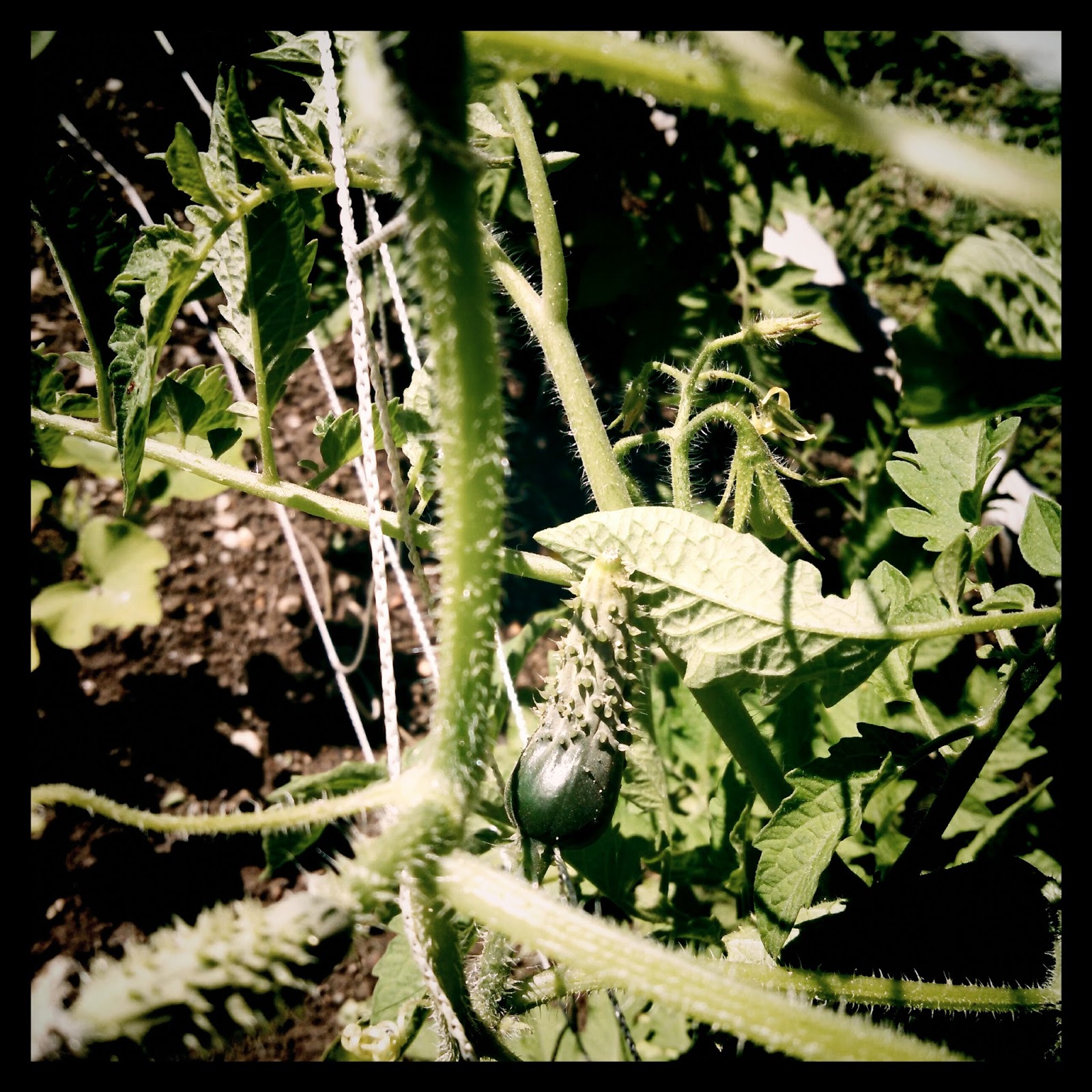
new cucumber

new broccoli

sweet potatoes

grape tomatoes

carrots

herbs

kale

panoramic


Wednesday, June 3, 2015